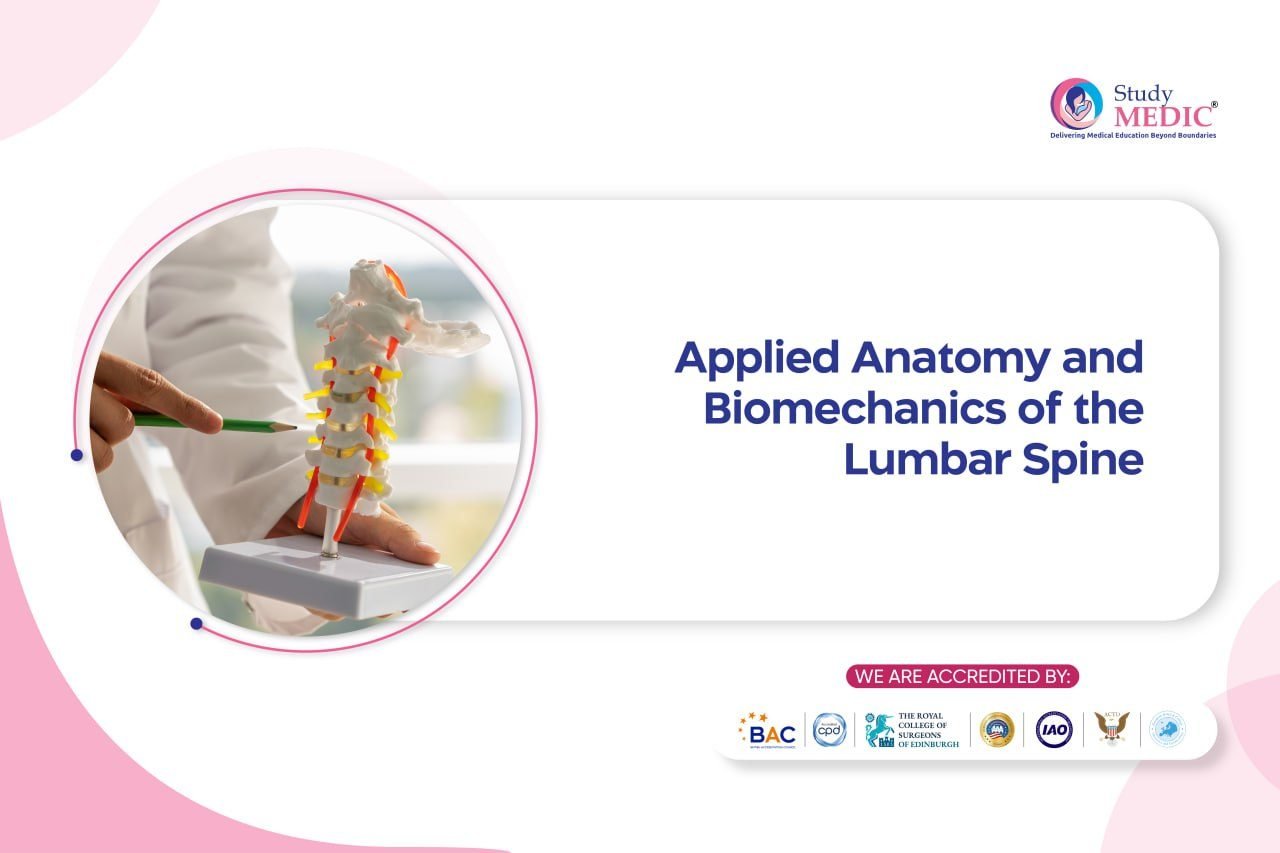
Applied Anatomy and Biomechanics of the Lumbar Spine
£15.00
This online physiotherapy CPD course provides a clear and clinically relevant overview of the structural anatomy and biomechanics of the lumbar spine. It covers vertebrae, intervertebral discs, facet joints, ligaments, muscles, and neural structures, and explains how these components interact to support movement, load distribution, and spinal stability.
The course connects anatomy and biomechanics to common lumbar dysfunctions such as discogenic pain, facet irritation, and postural imbalances. You’ll apply this knowledge to safe movement strategies, posture education, and early rehabilitation planning, strengthening clinical reasoning in musculoskeletal practice.
CPD Information
- CPD Credit Hours: 1.5 hours
Who Should Enrol
Physiotherapists
- Musculoskeletal, Sports, and Orthopaedic Physiotherapy Specialists
- Chiropractors, Osteopaths, and Manual Therapists
- Rehabilitation and Pain Management Practitioners
- Occupational Therapists in musculoskeletal or rehabilitation settings
Resources Included
- Downloadable course slides and summary tools
- CPD Certificate
- 30 days of access to learning materials
Course Presenter
Gehan Baalawi, BSc (Hons) Physiotherapy, Dip. Health & Social Care
Gehan Baalawi is an evidence-based physiotherapist with emerging expertise in geriatric care. She holds a BSc (Hons) in Physiotherapy from the University of the West of England (UWE), Bristol, and a Diploma in Health & Social Care from SGS College. Gehan combines clinical practice, research, and teaching to empower healthcare professionals, focusing on validated screening tools, multicomponent interventions, and practical strategies to improve patient outcomes. She has also completed additional training in Mental Health Care, Leadership, and Well-Being, and is a registered member of the HCPC and CSP, UK.
Features

Describe the key structural components of the lumbar spine and their functional roles

Explain biomechanical principles governing lumbar movement, load transfer, mobility, and stability

Relate anatomical structures to common lumbar dysfunctions

Interpret the role of imaging (X-ray, MRI, CT) in assessing lumbar anatomy and biomechanics

Analyse the impact of biomechanical stressors such as forward bending and manual handling

Apply anatomical and biomechanical knowledge to movement advice, posture education, and early rehabilitation
Remarks
TAX is applicable for all the courses and products.Contact our Study Support team for more details
+91 8562 800 700 +44 7341 981 539 sales@studymedic.comRelated Products
-

Physiotherapy in Congestive Heart Failure: Diagnosis to Intervention
£25.00 Add to cart Buy Now -

A Comprehensive Guide to Pregnancy related Musculoskeletal Conditions – Pregnancy Care Physiotherapy
£25.00 Add to cart Buy Now -

Evidence-Based Antenatal Exercise Prescription: Clinical Approaches for Physiotherapists
£25.00 Add to cart Buy Now -

Reflective Writing for Physiotherapists: From Reaction to Insight
£25.00 Add to cart Buy Now
Reviews
There are no reviews yet.